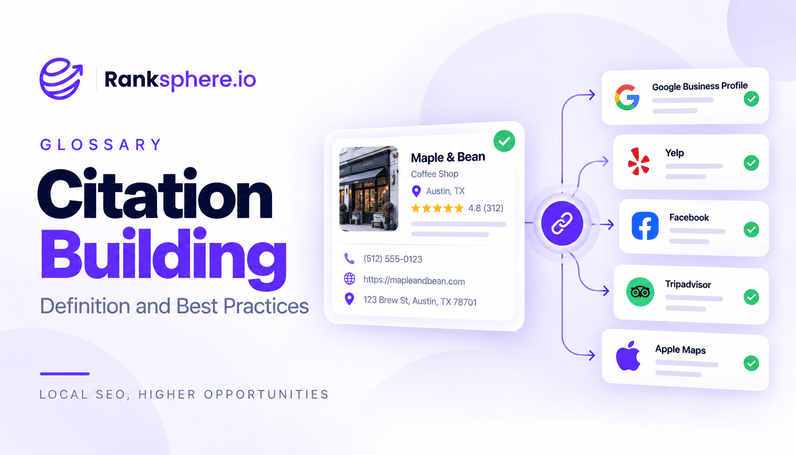
Citation building is the process of creating and maintaining business listings across directories, review platforms, maps, industry websites and data providers. These listings usually include the business name, address and phone number, along with other useful details such as opening hours, categories and website information.
Good citation building starts with accuracy, not volume.
Before adding new listings, check what is already out there. If your business is still showing an old address, incorrect phone number or duplicate listing on important platforms, creating more citations simply spreads the problem further.
That is why citation building normally works best after a citation audit.
Why citation building matters
Local citations give search engines and customers more places to find accurate information about your business.
When important platforms show the same core details, it becomes easier to connect those listings to the same business. Citations can also help customers discover you through map services, directories, review sites and industry-specific platforms outside Google.
The goal is not to appear on every directory you can find. A smaller number of accurate, relevant listings is usually more useful than hundreds of low-quality profiles that nobody visits.
Before building anything new, make sure you have a clear reference version of your NAP, correct existing errors and deal with any duplicates.
A citation audit should therefore come first. Once the existing footprint is clean, you can see which worthwhile platforms are still missing.
Where to build citations
There is no universal list that suits every business. The best citation sources depend on the country, industry and local market.
A practical order is:
- Major search and map platforms — start with widely used services such as Google Business Profile, Apple Business Connect and Bing Places where relevant.
- Data providers and aggregators — these services can distribute business information to other platforms. See data aggregator.
- Established directories and review sites — choose platforms that customers in your market actually use.
- Industry-specific websites — legal, healthcare, hospitality, home services and other sectors often have specialist directories that are more relevant than general listing sites.
- Local organisations and websites — chambers of commerce, trade groups, community organisations, local publications and sponsorship pages can provide useful local citations that competitors may find harder to reproduce.
The question to ask is not, “How many citations can we build?”
It is, “Which listings would make sense for this business to have?”
How to do citation building properly
Whenever possible, claim and manage important listings rather than leaving them unattended.
Use accurate business information and complete the fields that genuinely help customers understand the business. That can include opening hours, categories, services, photos and website details as well as the core NAP information.
You should also keep a record of the listings you manage. If the business moves, changes its phone number or rebrands later, knowing where those profiles are makes updating them far easier.
Ranksphere's citation management covers 500+ directories, flagging missing listings alongside mismatched and duplicate ones so the build list comes out of the audit rather than a generic template.
Do not worry about creating every possible listing at once. Work through the platforms that matter most and spend more time on quality sources than on adding another generic directory simply to increase the count.
Common citation building mistakes
Building before auditing. If incorrect listings already exist, creating more profiles can spread the same problem further.
Buying citations purely by volume. A package promising hundreds of listings may sound impressive, but many of those directories may have little relevance or value to your customers.
Using outdated business information. Always check the current name, address, phone number and website before submitting a listing.
Creating listings you cannot manage later. If an important profile cannot be claimed or updated, it becomes much harder to maintain when the business changes.
Leaving useful fields empty. A citation should help customers as well as search engines. Add relevant categories, opening hours, images and other information where appropriate.
Ignoring industry and local sources. Specialist and genuinely local citations are often more meaningful than another generic business directory.
Treating citation building as finished forever. Listings can become outdated, businesses move and new platforms emerge. Citation management needs occasional maintenance.
Citation building best practices
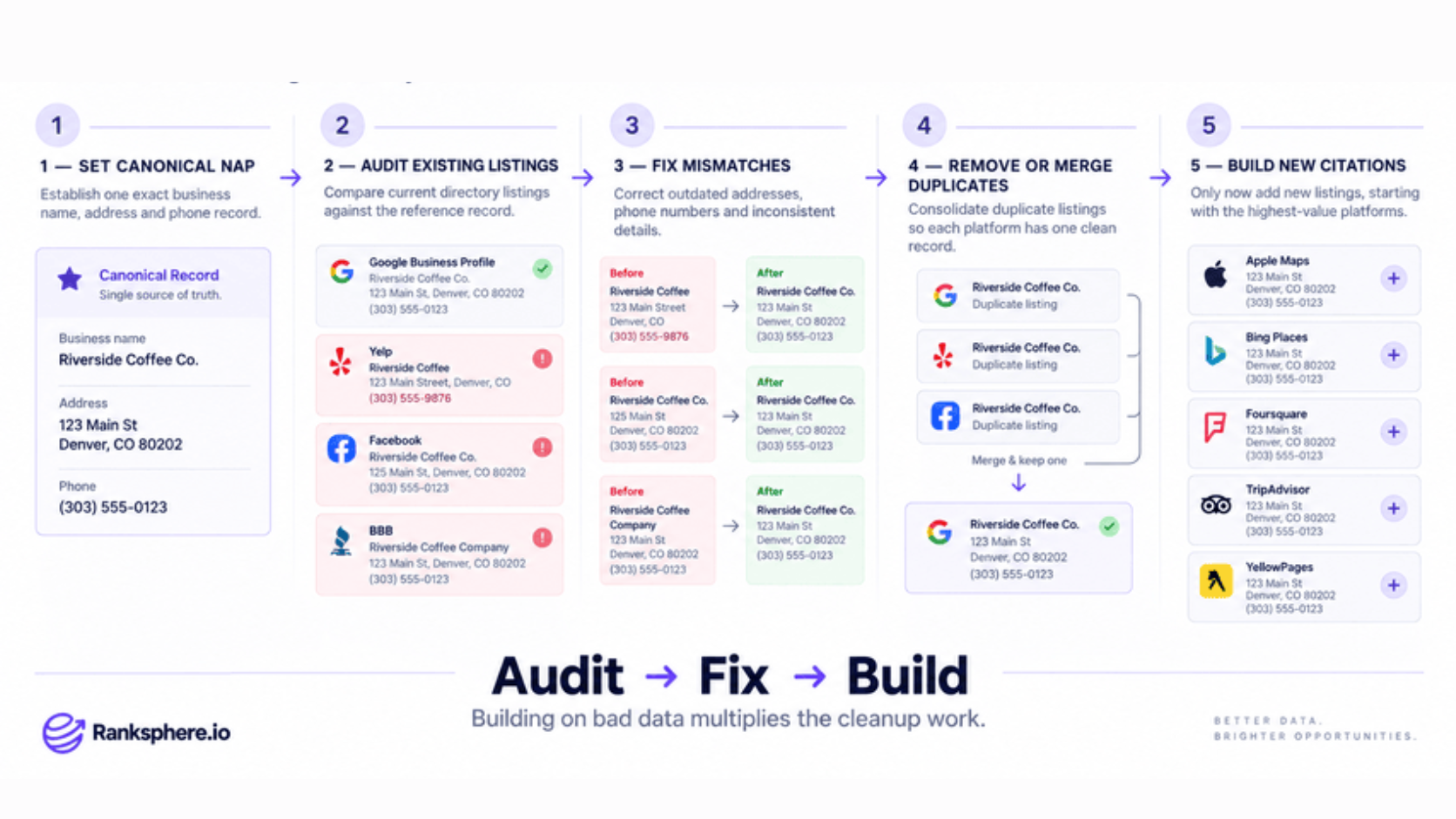
Start with an audit and clean up existing information before adding new listings.
Keep one reliable reference record for each business location so anyone creating citations uses the correct information.
Prioritise platforms according to relevance and importance rather than chasing a target number of citations.
Claim important profiles where possible and keep access details somewhere secure so future updates can be made easily.
Look beyond general directories. Industry associations, local organisations, community partnerships and reputable local websites can provide citations with stronger context around what the business does and where it operates.
Most importantly, review your listings after a move, rebrand, new phone number or other major business change.
Example
“Ashcroft Legal decides to improve its local presence and initially signs up for a citation package that promises hundreds of directory submissions.
A few years later, the firm discovers that many of those profiles are on websites its clients are unlikely to use. Some still show an old suite number, while others cannot be updated easily because nobody kept track of how they were created.
Rather than adding another batch of listings, the firm changes its approach.
It first audits the citations already associated with the business and corrects the important ones. It then focuses on the major search and map platforms, relevant legal directories, professional organisations and a handful of genuinely local sources.
The result is a much smaller citation footprint, but one that is easier to manage and more relevant to the business.
That is the point of good citation building. The value is not in having the largest possible list of directory URLs. It is in making sure the business appears accurately in the places that customers and search platforms actually use.”
See also
Citation — an online mention or listing of a business
Citation audit — checking existing citations for errors, gaps and duplicates
NAP — the business name, address and phone information used across listings
Data aggregator — services that distribute business information to other platforms
Duplicate listing — multiple listings that can create conflicting business information