Third-party review platforms are independent websites where customers can rate businesses, describe their experiences, and read feedback from other people.
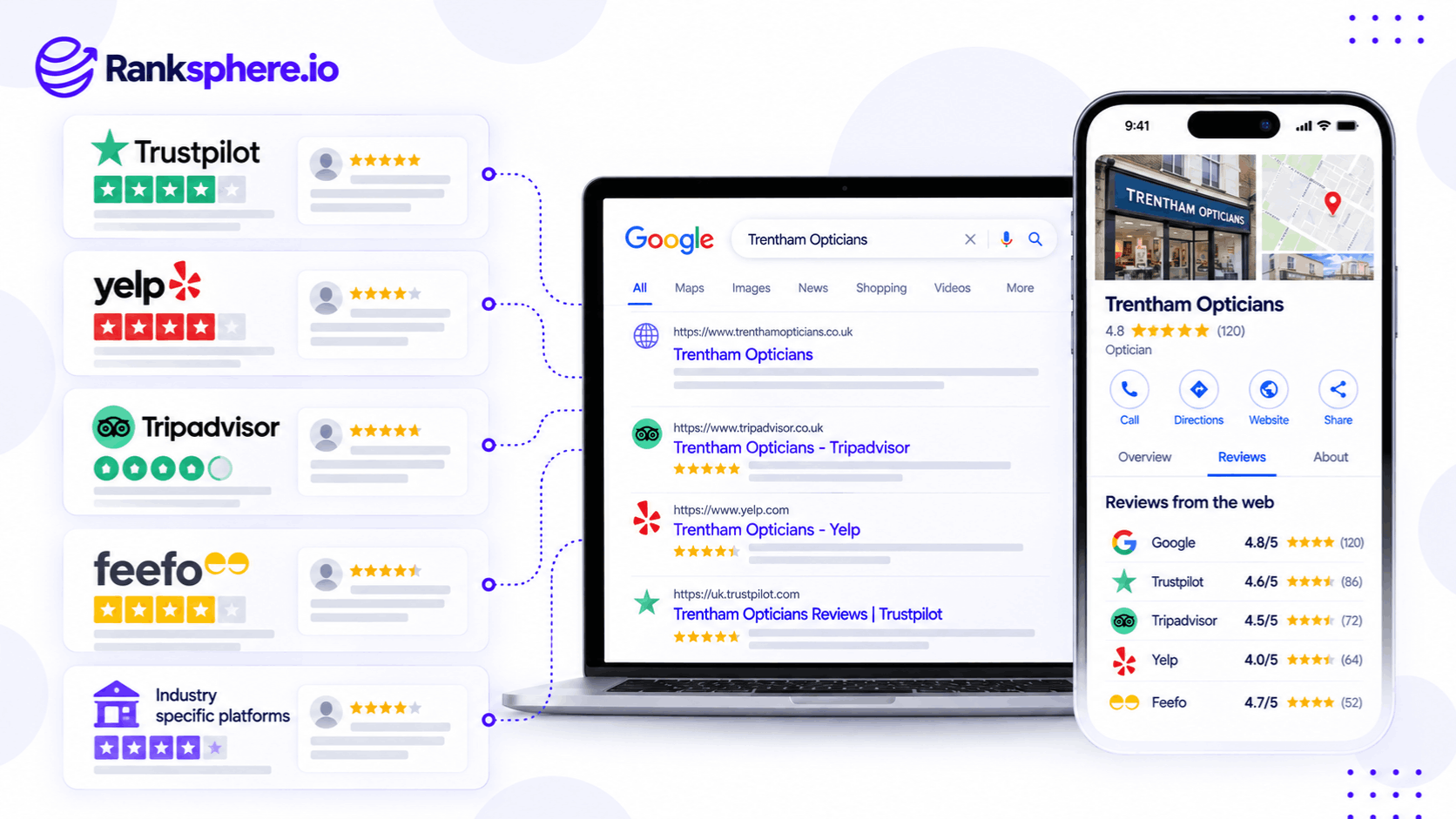
Examples include Trustpilot, Yelp, Tripadvisor, Feefo, and review websites dedicated to particular industries.
Unlike reviews published directly on a business's own website, third-party reviews are hosted and moderated by an external platform.
For example, someone choosing a hotel might check Tripadvisor, while a customer researching an online retailer may look at Trustpilot.
For local businesses, reviews can influence how potential customers evaluate a company before making an enquiry or booking an appointment.
However, not every review platform deserves the same level of attention.
A dental practice, restaurant, and plumbing company may benefit from completely different review websites.
The useful approach is to identify which platforms customers actually use, understand their rules, and focus on maintaining accurate, trustworthy profiles.
Why Do Third-Party Review Platforms Matter?\
Customer reviews often form part of the research process before someone chooses a business.
For example, a homeowner considering a roofing contractor may search for the company name and look for independent feedback.
The customer may want to know whether previous clients were satisfied with the work, communication, and overall experience.
Third-party platforms provide information beyond the business's own marketing.
They can also appear prominently in Google search results.
They Help Customers Evaluate Businesses
A review platform may show:
- Overall customer ratings
- Written reviews
- Dates of customer experiences
- Business responses
- Information about the services reviewed
This can help customers make more informed decisions.
However, a high rating alone doesn't guarantee that a business is the best choice.
Review volume, recency, relevance, and the details contained in customer feedback can all affect how useful the information is.
They Can Appear in Branded Search Results
A business's brand SERP may include links to third-party review platforms.
For example, someone searching for a company's name might see its website followed by a Trustpilot or Yelp profile.
Even if the business doesn't actively request reviews on that platform, customers may still encounter it.
That makes it worth monitoring relevant review sites, particularly those that rank prominently for the business's name.
They Provide Another Source of Customer Feedback
Reviews can reveal recurring problems and customer concerns.
For example, a restaurant may receive repeated comments about reservation delays.
A plumbing company may receive feedback about communication or appointment scheduling.
These patterns can help businesses identify operational issues.
However, reviews should be considered alongside other customer feedback rather than treated as a complete representation of every customer's experience.
They May Generate Referral Traffic
Some review platforms send visitors directly to business websites.
For example, someone researching local contractors may find a business through an industry review directory and click through to request a quote.
This creates referral traffic.
However, not every platform generates meaningful website visits or enquiries.
Businesses should measure the actual value of a platform before investing heavily in paid features.
Should Businesses Use Multiple Review Platforms?
There is no universal number of review platforms a business should maintain.
For many eligible local businesses, Google Business Profile reviews are an important starting point because Google Search and Maps are common ways customers discover nearby services.
Beyond Google, additional platforms should be selected based on relevance.
For example:
- A restaurant may benefit from Tripadvisor.
- A home services business may benefit from an established trade directory.
- An online retailer may benefit from Trustpilot or another relevant product and service review platform.
- A hotel may receive substantial customer feedback through travel and booking platforms.
The question isn't how many profiles the business can create.
It's which platforms customers genuinely use when making decisions.
Why Spreading Review Requests Too Widely Can Be Inefficient
A business might ask customers to leave reviews on several platforms.
However, repeatedly requesting feedback can create unnecessary friction.
For example, a restaurant asking customers to review it on Google, Tripadvisor, Trustpilot, and several other websites may make the process more complicated.
Customers may not have accounts on those platforms or may prefer not to leave reviews in multiple places.
A more focused approach can make review requests easier to manage.
However, there is no verified rule that a business needs at least 20 reviews on a platform to appear credible.
A smaller number of genuine, detailed reviews may still be useful.
Monitor Relevant Platforms Even If You Don't Request Reviews There
Some platforms allow businesses to claim a profile and respond to reviews without actively soliciting new feedback.
Yelp is an important example.
Its policies discourage businesses from asking customers to write Yelp reviews.
However, businesses can still maintain their profiles and respond to reviews according to Yelp's rules.
The distinction is between monitoring a platform and actively requesting reviews through it.
How to Choose the Right Third-Party Review Platforms
The best platform depends on the audience, industry, and value it provides.
1. Check Where Your Customers Look for Reviews
Start with customer behaviour.
For example, a hotel should consider the platforms travellers commonly use when comparing accommodation.
A roofing company should research the trade and service directories customers use in its market.
Ask customers how they found the business and whether they checked reviews before contacting it.
These conversations can reveal which platforms deserve attention.
2. Search Your Business Name
Search Google for the full business name.
Review which third-party review sites appear.
If a review platform ranks prominently, potential customers may encounter it even if the business rarely uses it.
Claiming and maintaining an accurate profile may be worthwhile.
However, businesses should follow the platform's ownership and verification requirements.
3. Consider Industry Relevance
Some review platforms serve a broad audience.
Others focus on specific industries.
For example:
- Tripadvisor is strongly associated with travel and hospitality.
- Yelp covers many local business categories.
- Trustpilot is commonly used for company and service reviews.
- Feefo provides review collection and management services for participating businesses.
- Trade and professional directories may be important in particular markets.
A platform's industry relevance can matter more than its overall popularity.
4. Evaluate Referral Traffic and Enquiries
Check whether the platform generates measurable business activity.
For example, a paid trade directory might send visitors to a roofing company's website.
The agency can review referral visits and track enquiries where measurement is configured.
However, some customers may contact the business directly from the platform.
That means website traffic alone may not capture its full contribution.
5. Review the Platform's Rules
Review policies differ between platforms.
Some encourage businesses to send review invitations.
Others prohibit solicitation.
Before adding any platform to a review request process, check its current guidelines.
6. Consider the Cost
Some platforms offer free business profiles alongside paid features.
A business should understand what the subscription provides.
For example, paid features may involve additional analytics, profile tools, or review collection options.
The commercial value should be assessed against the business's actual needs rather than the platform's marketing claims.
Google vs Yelp vs Trustpilot vs Tripadvisor
Different platforms have different rules for collecting reviews.
This is one of the most important things to understand before creating a review campaign.
| Platform | Can businesses request reviews? | Important conditions |
|---|---|---|
| Yes | Genuine reviews, no incentives, no selective requests for positive feedback | |
| Yelp | No | Businesses should not solicit reviews |
| Trustpilot | Yes | Invitations must be fair, neutral, and without incentives |
| Tripadvisor | Yes | Genuine guest reviews are permitted, but incentives are prohibited |
| Other platforms | Varies | Check each platform's current guidelines |
Google Reviews
Google allows businesses to ask customers to leave reviews about genuine experiences.
However, businesses must not:
- Offer incentives in exchange for reviews
- Selectively ask only satisfied customers
- Discourage negative reviews
- Pressure customers to leave a review
- Request specific ratings or wording
This connects directly to review gating.
For example, a business shouldn't ask happy customers to review it publicly while directing unhappy customers only to a private feedback form.
The invitation process should allow customers to share their genuine experiences.
Yelp Reviews
Yelp takes a different approach.
Its policy tells businesses not to ask customers for Yelp reviews.
That includes requesting reviews through emails, messages, printed materials, or other solicitation methods.
Yelp uses recommendation software to determine which reviews are featured in a business's overall rating and review count.
The platform may also issue Consumer Alerts for certain policy violations.
For example, a restaurant that regularly asks customers to leave Yelp reviews may find that some solicited reviews aren't recommended.
Businesses should therefore avoid including Yelp in standard review request campaigns.
However, they can still claim their listings, maintain accurate information, and respond to feedback where permitted.
Trustpilot Reviews
Trustpilot permits businesses to invite customers to write reviews.
However, invitations must be fair, neutral, and unbiased.
For example, an online retailer may invite customers to review their experiences after receiving an order.
The business shouldn't send invitations only to customers who have given positive feedback.
Trustpilot also prohibits incentives connected with posting or editing reviews.
This includes discounts, gifts, refunds, and other benefits offered in exchange for feedback.
The platform's rules apply to review invitations regardless of whether a business uses automated or manual collection methods.
Tripadvisor Reviews
Tripadvisor allows eligible businesses to encourage guests to share reviews.
For example, a hotel may invite guests to describe their stay.
However, Tripadvisor prohibits incentives in exchange for reviews.
Businesses should avoid offering discounts, gifts, or other rewards for posting feedback.
Reviews must represent genuine experiences.
Industry-Specific Review Platforms
Some sectors use specialised review websites.
For example, a roofing business may have a profile on a trade directory that accepts verified customer feedback.
The platform may have its own rules about:
- Who can submit reviews
- How customer experiences are verified
- Whether businesses can send invitations
- How disputes are handled
- Which reviews are displayed
Businesses should review those requirements before adding the platform to their review process.
How Do Third-Party Reviews Affect Local SEO?
Third-party reviews can support a business's online visibility and reputation, but their impact should not be overstated.
Google Reviews and Local Rankings
Google states that more reviews and positive ratings can help local rankings.
However, this guidance specifically relates to Google's local ranking systems and customer review signals.
It doesn't mean that collecting more Trustpilot or Yelp reviews automatically increases Google Maps rankings.
Third-Party Review Websites Can Rank Organically
Review platforms may appear in Google's ordinary search results.
For example, a Trustpilot page about a business may rank for searches involving the business name and reviews.
This can make the platform part of the customer's research journey.
However, businesses generally don't control where Google ranks those third-party pages.
Reviews May Influence Customer Decisions
A person may read reviews before visiting a website or contacting a business.
That can make third-party platforms useful even when they don't directly improve local rankings.
However, businesses shouldn't assume that every additional review produces more calls or enquiries.
Review Platforms May Be Referenced by AI Search
AI-powered search systems may retrieve or reference information from review platforms when it is relevant and accessible.
However, no business can guarantee that an AI assistant will use a particular platform or cite its reviews.
The availability and treatment of review information can vary between AI systems.
Businesses should therefore focus on genuine customer feedback rather than collecting reviews solely to influence AI-generated answers.
Are Paid Review Platforms Worth It?
Some review platforms charge businesses for additional features.
Examples may include advanced analytics, profile management tools, review collection services, or advertising opportunities.
Before paying, consider whether the platform helps customers discover or evaluate the business.
This is similar to assessing an industry directory.
Useful questions include:
- Does the platform rank for relevant searches?
- Do customers recognise or use it?
- Does it generate measurable enquiries?
- Are the paid features genuinely useful?
- Can the business manage the profile without paying?
- Do the terms allow the business to access or export relevant information?
- Does the platform follow appropriate review verification practices?
A paid platform may provide value in one industry and little benefit in another.
Its commercial model alone doesn't determine whether it is trustworthy.
The decision should be based on actual business value.
How to Manage Reviews Across Multiple Platforms
A business doesn't necessarily need to request reviews on every platform to monitor customer feedback.
A practical review management process can include:
Monitor Relevant Profiles
Check the platforms where customers are leaving feedback.
Pay particular attention to sites that rank for the business name or are widely used in its industry.
Respond to Reviews Appropriately
Where the platform permits responses, acknowledge feedback professionally.
For example, a negative review might identify a communication problem that the business needs to investigate.
Avoid publishing private customer information or arguing publicly.
Follow the Rules for Review Invitations
Before requesting reviews, confirm that the platform allows solicitation.
Use fair, neutral invitations and avoid incentives or sentiment-based filtering.
Track Review Activity
Monitor factors such as:
- New reviews
- Review ratings
- Unanswered reviews
- Recurring customer concerns
- Review activity over time
Ranksphere's Review Management helps businesses monitor and manage customer feedback, including preparing review responses.
This can make it easier to keep track of review activity without treating every platform as a separate marketing campaign.
Common Third-Party Review Platform Mistakes
- Requesting reviews on too many platforms. This can complicate the customer experience and make the programme harder to manage.
- Using one invitation process everywhere. Platforms have different solicitation rules.
- Asking customers for Yelp reviews. Yelp explicitly prohibits review solicitation.
- Filtering customers by sentiment. Selectively requesting positive reviews violates major platform policies.
- Offering rewards for reviews. Incentives are prohibited by several major review platforms.
- Ignoring relevant review websites. Customers may encounter those profiles even if the business doesn't actively promote them.
- Choosing platforms solely by domain authority. Customer relevance matters more.
- Paying without measuring value. A subscription should have a clear business purpose.
- Assuming low review volume is automatically harmful. The usefulness of a profile depends on context, authenticity, and relevance.
- Treating third-party reviews as guaranteed ranking signals. Search engines do not publish universal ranking benefits for every review platform.
Third-Party Review Platform Best Practices
To manage third-party reviews effectively:
- Prioritise review platforms relevant to your customers.
- Keep Google Business Profile reviews a focus where appropriate.
- Research which review websites appear for your business name.
- Claim and maintain relevant profiles.
- Follow each platform's review collection policies.
- Avoid incentives and selective solicitation.
- Never request Yelp reviews.
- Monitor customer feedback across important platforms.
- Respond professionally where permitted.
- Track recurring issues raised in reviews.
- Evaluate paid platforms using measurable business outcomes.
- Review your platform strategy periodically.
The objective isn't to collect reviews everywhere.
It's to maintain credible, accurate, and useful customer feedback on the platforms that matter to the business.
Example of Review Platform Management for a Restaurant Group
Consider a hypothetical restaurant group operating several locations.
The marketing team creates a review campaign encouraging customers to leave feedback on Google, Tripadvisor, or Yelp.
Printed cards are included with customer bills.
The intention is to increase the group's visibility across several review platforms.
What Goes Wrong?
The marketing team hasn't checked each platform's rules.
Google and Tripadvisor allow businesses to request genuine reviews under their respective policies.
Yelp, however, prohibits businesses from soliciting reviews.
The restaurant group has therefore included a platform that shouldn't be part of its review request campaign.
The team also notices that some Yelp reviews aren't recommended by the platform's software.
However, it cannot assume that every unrecommended review was filtered because of the campaign.
How the Restaurant Group Changes Its Approach
The marketing team reviews the relevant platform guidelines.
It removes Yelp from its review invitations.
Staff are also instructed not to ask customers for Yelp reviews.
The business continues maintaining accurate Yelp listings and responding to customer feedback where permitted.
For Google and Tripadvisor, the group reviews its invitation language and ensures that requests are neutral and do not offer incentives.
How the Group Measures Results
The team monitors:
- Review activity on each platform
- Customer feedback themes
- Review response activity
- Relevant referral traffic
- Restaurant enquiries and reservations
It also reviews whether the selected platforms are genuinely useful to customers.
The group doesn't assume that a particular review count guarantees better rankings or more bookings.
Example Shows
“The problem wasn't that the business wanted customer feedback on several websites.
It was treating every review platform as though it followed the same rules.
A review collection method that is acceptable on one platform may be prohibited on another.
Third-party review platforms should be chosen for their relevance to customers, not simply because they offer another place to collect stars.
For local businesses, a focused approach built around genuine feedback, accurate profiles, and platform compliance is more useful than trying to generate reviews everywhere.”
See Also
- Online Review — Understanding customer reviews and their role in business reputation.
- Yelp — A review platform with strict rules against solicitation.
- Review Gating — Why businesses shouldn't filter review invitations based on customer sentiment.
- Brand SERP — How third-party review websites can appear for branded searches.
- Referral Traffic — Measuring visitors arriving from external websites.
- Reputation Management — Monitoring and responding to customer feedback across online platforms.